Monday, 26 January 2026

Non-Muscle invasive bladder cancer disease

The bladder is a balloon-shaped organ in the pelvic area that stores urine and is part of the urinary tract. Bladder cancer typically affects older adults, though it can occur at any age. It is usually diagnosed early, when it is most treatable. Bladder cancer is the 9th most common cancer in the world. It is the 6th most common cancer among men. It was estimated that, in the US, >80,000 new cases of bladder cancer were diagnosed in 2024 and 16,840 bladder cancer deaths occurred. In 2021, there were an estimated 730,044 people living with bladder cancer in the United States. The 5-year prevalence estimates in the world, show that almost 2 Million people (all genders) are living with bladder cancer within five years of a past diagnosis.

The following table presents the 10 countries with the highest bladder cancer incidence in 2022.

Rank

Country

New cases

ASR/100,000


Total WW

614,298

5.6

1

China

92,883

3.4

2

US

80,404

10.5

3

Italy

34,580

18.1

4

Japan

34,568

7.0

5

Germany

29,035

12.4

6

UK

23,643

13.4

7

India

22,548

1.6            

8

Spain

21,418

19.3

9

France (metropolitan)

19,733

10.1

10

Russia

19,352

6.9


Non-muscle invasive bladder cancer accounts for approximately 75-85% of new bladder cancer cases3. In terms of worldwide numbers, that is circa 550,000 people.

Patients with bladder cancer are differentiated into one of three groups: (1) those with low risk disease in whom the main risk is recurrent low-risk papillary disease with a small chance of dying of the disease; (2) those with intermediate and high-risk non-muscle-invasive disease and Carcinoma in situ (CIS) in whom there is a high chance of disease progression and subsequent death from bladder cancer; and (3) those with muscle-invasive disease in whom there is imminent risk of death from bladder cancer.

Non muscle invasive bladder cancer usually appears as small growths, shaped like mushrooms. These grow out of the bladder lining. This is called papillary bladder cancer. It can be removed and may never come back. T1 tumours are early cancers that have grown from the bladder lining into a layer underneath. This layer is called the lamina propria. High grade T1 tumours though being early cancers, can grow very quickly.

Carcinoma in situ is an intra-epithelial, High Grade, non-invasive Urothelial Cancer (UC). It can be missed or misinterpreted as an inflammatory lesion during cystoscopy if not biopsied.

The goals of current treatment for patients with non-muscle-invasive bladder cancer are to prevent disease recurrence, or progression to muscle-invasive disease, to avoid cystectomy (removal of the bladder) and, ultimately, to enhance survival. Treatment options of non-muscle invasive bladder cancer are relatively limited and not much, in terms of effective treatment options, has been introduced in the last 60 years. Clinical tests performed in past years have provided valuable information on the pathophysiology and treatment of non-invasive bladder cancer.

Bladder cancer patients are not only numerous, but also suffer from reduced Quality of Life, and are at real risk of progression and specific deaths, they also pose a heavy economic burden on the healthcare system. Repeated TURBT operations, instillations, risk of progression into invasive disease and consequent cystectomies, systemic chemotherapy and/or radiotherapy are only few of the expensive routine procedures that the healthcare system provides, not including, of course, the high expenses due to complications, hospitalization days, morbidity, stoma devices and their maintenance. Several studies have reported that older patients are more susceptible to complications and poor outcomes from Radical Cystectomy - RC . Schiffmann et al reported in a retrospective study of 5,207 patients that 90-day mortality rates following RC were 6.4%, 10.1%, and 14.8% in patients aged 65–69 years, 70–79 years, and ≥80 years, respectively .

Synergo therapy - 

Local RF-Induced Thermochemotherapy for the treatment of non-muscle-invasive bladder cancer (NMIBC)

Synergo represents an additional treatment option for people with intermediate-risk or high-risk NMIBC whose disease has recurred following intravesical BCG therapy, patients who are refractory to BCG, patients who are resistant to BCG or patients who cannot tolerate BCG. Synergo can also be used in response to patient preference or when supply of the drug is limited or delayed.

The clinical benefits of the Synergo technology, as presented in published articles, are the fact that patients will require fewer treatments, fewer repetitive TURBT operations (which leads to shorter recovery times). Also, sparing a cystectomy to a patient will give him/her several years of functioning bladder, ability to function well at home and outside, and a much better quality of life (to the family as well).

Synergo is conducted using local anesthesia (gel) in an ambulatory (outpatient) setting. Patients resume their daily activities at the end of each treatment.

The reduction in recurrences and the need for operations improves patients' quality of life by preserving bladder functioning and avoiding patients' lifestyle disruption. A recent study showed that the average length of stay after cystectomy was 15 ± 13 days. In some of the patients this can be avoided when Synergo is offered. For instance, Colombo et al. 2011 reported a 10-year DFS disease free survival of 53% with Synergo & MMC vs 15% with MMC. Long-term follow up evidence originating from a single center experience showed a 70.8%. bladder preservation rate for a mean follow-up of 55.5 months. In 76.0% of patients, a radical cystectomy could be prevented for two years from last TURBT, and in 61.1% a radical cystectomy could be prevented for five years. Overall survival (OS) rate of patients who underwent radical cystectomy was 71.0% at five years and 42.6% at ten years.

references
1 (GLOBOCAN, 2022)
2 National Cancer Institute 2013
3 Dobruch J, Oszczudłowski M. Bladder cancer: Current challenges and future directions. Medicina
(Kaunas). (2021) 57(8):749. doi: 10.3390/medicina57080749
4 Otto, W., et al. WHO 1973 grade 3 and infiltrative growth pattern proved, aberrant E-cadherin expression tends to be of predictive value for progression in a series of stage T1 high-grade bladder cancer after organ-sparing approach. Int Urol Nephrol, 2017. 49: 431.
5 Sylvester RJ, van der Meijden AP, Oosterlinck W, et al. Predicting recurrence and progression in individual patients with stage Ta T1 bladder cancer using EORTC risk tables: a combined analysis of 2596 patients from seven EORTC trials. Eur Urol. 2006;49:466–465. doi: 10.1016/j.eururo.2005.12.031. discussion 475–477.
6 Shelley M, Court JB, Kynaston H, et al. Intravesical bacillus Calmette-Guérin in Ta and T1 bladder cancer. Cochrane Database Syst Rev. 2000;2000(4):CD001986. doi: 10.1002/14651858.CD001986.
7 Shelley MD, Court JB, Kynaston H, et al. Intravesical bacillus Calmette-Guerin versus mitomycin C for Ta and T1 bladder cancer. Cochrane Database Syst Rev. 2003;2003(3):CD003231. doi: 10.1002/14651858.CD003231.
8 Babjuk M, Bohle A, Burger M, Capoun O, Cohen D, Comperat EM, et al. EAU Guidelines on Non-Muscle-invasive Urothelial Carcinoma of the Bladder: Update 2016. Eur Urol. 2017;71(3):447-61. Epub 2016/06/22. doi: 10.1016/j.eururo.2016.05.041. PubMed PMID: 27324428.
9 EAU Guidelines. Edn. presented at the EAU Annual Congress Milan 2023. ISBN 978-94-92671-19-6.
10 Abern MR, Owusu RA, Anderson MR, Rampersaud EN, Inman BA. Perioperative intravesical chemotherapy in non-muscle-invasive bladder cancer: a systematic review and meta-analysis. J Natl Compr Canc Netw. 2013;11(4):477-84. Epub 2013/04/16. doi: 10.6004/jnccn.2013.0060. PubMed PMID: 23584348.

Thursday, 15 February 2024

Update on current management of NMIBC


Theories behind Bacillus Calmette-Guérin failure in high-risk non-muscle-invasive bladder cancer and update on current management


A new article written by Ms. Louise Paramore, Ms. Hanna Maroof and Mr Ahmed Ali, Clinical Lead, from the Department of Urology, Frimley Park Hospital NHS Trust, discusses in depth the mechanisms of action and pathophysiology of BCG, potential theories behind BCG failure, and the scope of novel treatments for this surgical conundrum.

Published on Cancer Pathogenesis and Therapy


Synergo technology was presented in the article as one of the treatment options for patients who develop recurrence during BCG treatment or those who cannot tolerate the side effects.


Synergo technology provides an advanced therapeutic option for NMIBC patients. The treatment is based on local RF and tissue hyperthermia in combination with simultaneously cooled chemotherapy instillation.

RF is delivered locally to the bladder wall via a miniaturised, embedded antenna.

RF has been shown to have a selective effect on cancer cells. Synergo’s powerful combination enables the drug to access those cells and in-between them, resulting in higher cell uptake and a higher rate of DNA bonding.

Wednesday, 9 November 2022

Synergo in a rare case of T1 bladder cancer

Synergo® in a rare case of T1 bladder cancer

Bladder cancer is a rare phenomenon in children, with an incidence rate of 0.1-0.4% during the first two decades of their lives.

A recent new article (2022) published in the Journal of Pediatric Urology by Dr. Galia Raisin and Prof. Boris Chartin from Shaare Zedek Medical Center (Jerusalem) summarizes their experience and treatment outcomes in nine children, seven of whom are male (78%).

A single case of high-grade disease (UC pT1) was diagnosed in a 14-year-old girl, a kidney transplant recipient. Due to her immune status, she was ineligible for BCG treatment and therefore received 6 Synergo sessions, with no recurrence to date - at a follow-up of 4 years.

Galiya R, Stanislav K, Jawdat J, Benjamin H, Boris C. Pediatric urothelial bladder neoplasm. J Pediatr Urol. 2022 Jun 30:S1477-5131(22)00293-5. doi: 10.1016/j.jpurol.2022.06.026. Epub ahead of print. PMID: 35871900.


Monday, 17 January 2022

Synergo RF-CHT is effective in non-muscle invasive bladder cancer patients in whom standard intravesical treatments have failed and should be considered in patients who are unwilling or unfit to undergo radical cystectomy.

Long-Term Experience with Radiofrequency-Induced Hyperthermia Combined with Intravesical Chemotherapy for Non-Muscle Invasive Bladder Cancer.

We are honoured to share a peer-reviewed article on Synergo published in Cancers 2021 Journal by Iris S. G. Brummelhuis et al. https://pubmed.ncbi.nlm.nih.gov/33498535/

Their work concludes that Synergo is effective in NMIBC patients in whom standard intravesical treatments have failed and should be considered in patients who are unwilling or unfit to undergo radical cystectomy.

Patients characteristics:

299 intensively pretreated patients. Of these, 274 patients who fulfilled induction treatments were included in efficacy analysis. 

BCG-unresponsive NMIBC: 85.4% of the patients (BCG Refractory: 65% and BCG Intolerant 7.7%).

Patients with CIS with or without concomitant papillary tumor: 46.7% of the patients.

Results following Synergo treatment:

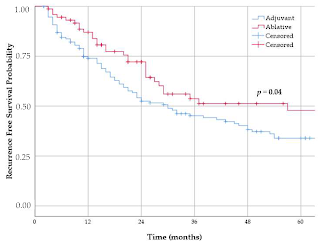
For CIS, six-month complete response -rate was 56.0%; and durable response rates were 79.7%, 66.5%, and 40.3% at one-, two- and five-year, respectively. 

Recurrence free survival rates for papillary patients were 77.9%, 57.5%, and 37.2%, at one-, two- and five-year, respectively respectively. 

Patients treated with ablative dose are less likely to develop recurrence (adjusted Hazard Ratio 0.54, p = 0.01), compared to adjuvant dose.


In total, 22 (8.5%) of all patients progressed to MIBC, of whom 20 had a high-grade tumor prior to RF-CHT and all 22 patients previously have been treated with BCG (21 BCG refractory, 1 unknown reason for BCG discontinuation). Eleven (4.3%) patients had distant metastases up to one year after treatment.
During the mean follow-up period of 55.5 months, 80 patients (29.2%) received a radical cystectomy with or without neoadjuvant chemotherapy. The bladder preservation rate for this follow-up period was thus 70.8%.


Medical Enterprises

Monday, 18 January 2021

Microwave-Induced Hyperthermia in combination with Chemotherapy: A retrospective analysis from Harlaching Hospital (2009-2015) Germany

We wish to congratulate Dr. Miriam Heibeler - with Head of department Prof. Dr. Oliver Reich at Klinikums Harlaching Lehrkrankenhaus der Ludwig-Maximilians-Universität München for her comprehensive thesis work on Synergo® published in 2020. We are extremely proud to share data from her study (translated from German). Full text: https://edoc.ub.uni-muenchen.de/25860/1/Hiebeler_Miriam.pdf

The following is a summary translated from Dr. Hiebeler study and with her permission.

The intended information is for professionals only.


Microwave-Induced Hyperthermia in combination 

with Chemotherapy: 

A retrospective analysis from Harlaching Hospital (2009-2015) 

Munich, Germany

Dr. Miriam Hiebeler


A total of 44 non-muscle invasive bladder cancer patients were treated with Synergo® in München Harlaching Hospital Munich between 2009-2015. 41% of the patients were treated according to the prophylactic (adjuvant) protocol and 59% treated according to Synergo® ablative (neo-adjuvant) protocol.

Synergo prophylactic (adjuvant):

18/44 (41%) intermediate and high-risk patients, of which 50% had history of recurring disease with an average of 2.3 incidences prior to Synergo therapy.

Results: At the end of Synergo® treatment cycle, all patients but 2 (11%), who were lost to follow-up, were tumor-free. 
14 of the 16 patients were tumor-free after completion of the Synergo therapy. This corresponds to 87.5% of the patients. The 2 patients who had a recurrence (mean time 2.3 years) both had pTaG1 tumor prior to Synergo which presented itself also when recurrence was recorded. 
The follow-up period for this cohort lasted an average of 3.2 years. 
No cystectomy had to be performed during that period. 


Synergo ablative (neo-adjuvant):

26/44 (59%) of the patients were treated. 90% were classified as high-risk (according to the EAU guidelines), with TaG3, T1G2, T1G3 and/or CIS. 73% of the patients thad history of recurring disease. 

An analysis of two groups who received Synergo ablative was performed. One group (62%) treated according to the protocol and the other (38%) was given Synergo as a therapy attempt although patients had contraindications prior to treatment (e.g. history of other tumours or urothelial carcinoma of the upper urinary tract). 

The Kaplan-Meier curve of all patients treated according to the ablative protocol shows 83% disease-free at one year and 70% at disease-free 5 years.


Below are the two ablative cohorts analysed separately:

Results of ablative Synergo:

16 patients were treated according to the Synergo recommended protocol. 15/16 of the patients were classified high-risk (according to EAU), one patient was classified as intermediate-risk. 73% of the patients had a history of disease and several were highly recurrent (3 or more episodes in the previous two years). 6 patients were “first episode” who had been diagnosed with T1 or high-grade carcinoma. Five of the latter had concomitant carcinoma in situ (CIS).

Of the 16 patients treated, 15 (93.8%) patients showed a complete response rate (tumor-free urinary bladder biopsies at the end of the ablation series). The average time to complete response was 1.9 months.

In one patient, the ablation therapy had no effect and a progression from TaG3 to pT2aG2 was recorded. This patient was cystectomised. Patients with complete response continued treatment and follow-up. The mean follow-up time was 24.2 months.

13/15 (86.7%) of the patients remained disease free for an average of 26 months and showed no further tumor formation during this period. Two patients (13.3%) had tumor recurrence. They were ultimately cystectomised after a follow-up period of 24.2 months.

In total, four of the 16 patients had to have their bladder removed. Two patients suffered tumor recurrence, one patient showed tumor progression and a cystectomy was performed on another patient with a reduced bladder capacity of less than 90 ml. The resected bladder, however, was completely tumor-free. One patient was partially resected because of a suspected tumor recurrence. The resected material was tumor-free. In the subsequent examinations, no new tumor was detected in the rest of the urinary bladder.


Results of ablative Synergo in patients with known exclusion criteria for Synergo 10/26):

One patient stopped therapy prematurely due to severe allergic skin reactions. His therapy results were not taken into account.

7/9 (77.8%) showed no tumor recurrence or progression after a follow-up period of an average of 33.4 months.

Two patients (22.2%) experienced recurrence in the form of muscle-invasive carcinoma. One developed pT2G3 carcinoma from TaG3 stage, the other developed invasive pT3aG3 carcinoma from T1G3 tumor. This patient (11.1%) underwent a cystectomy ten months after start of Synergo therapy.

A total of three patients (33.3%) died as a result of bladder carcinoma. In two patients the urinary bladder was tumor-free at the time of death; they died from extensive metastasis. The average time to death was 14.3 Months.


Side effects to therapy:

Side effects noted in a total of 63% of the prophylactic treated patients and in 69% of the ablative treated patients.
The most common were pain in the form of bladder cramps during treatments, dysuria, nocturia and allergy. Severe complications in the form of urethral strictures occurred in 27.8% of the patients, although there was no stricture impeding a cystoscope to pass. The most noted side effect observed in almost all patients during cystoscopy was posterior thermal wall reaction (average grade 2 in both groups). The posterior thermal wall reaction is symptom-free and disappears after a few months. Below are the detailed tables of side effects recorded in both prophylactic and ablative Synergo treatments.


Medical Disclaimer

While clinical studies support the safety and effectiveness of the Synergo® RF thermo-chemotherapy system when used in the treatment of non-muscle invasive bladder cancer, results may vary. There are no guarantees of outcome. Before you decide on treatment options, discuss them with your doctor. Understanding the risks of each treatment can help you make the best decision for your individual situation. Synergo treatment may not be appropriate for every individual; it may not be applicable to your condition. Always ask your doctor about all treatment options, as well as their risks and benefits. Only your doctor can determine whether Synergo is appropriate for your situation. 


Thursday, 12 November 2020

Radiofrequency treatment alters cancer cell phenotype

We are at the doorstep of an exciting era in which the due importance of Radiofrequency treatment for cancer (and possibly many other ailments) is being finally and gradually revealed.

Multiple studies are being conducted into this exciting field and plausible explanations of pathways are being suggested. Field in which these selective non-thermal effects have been shown include, and are not limited to treatment of Non-Small Cell Lung Cell Carcinoma, Glioblastoma, Bladder Cancer and Pancreatic Cancer.

Synergo incorporates a 915MHz generator, responsible for delivering microwave (the high end of the RF frequencies) in the treatment of bladder cancer. This RF is regulated in real-time by the operator (up to 36W).

One of the questions that is often raised is what effect the RF has on the cancer cells.

In vitro studies have demonstrated that tumor-specific frequencies identified in patients with various forms of cancer are capable of blocking the growth of tumor cells in a tissue- and tumor-specific fashion. Current experimental evidence suggests that tumor-specific modulation frequencies regulate the expression of genes involved in migration and invasion and disrupt the mitotic spindle.

2 independent studies present explanations to these effects and how RF operates.

An article published in 2015 by Ware et al. demonstrates that RF radiation creates micropores selectively on cancer cells and disconnects the adhesion between cancer cells. The writers conclude that there are clear phenotypical differences observed between cancerous and normal cells in both their untreated states and in their response to RF therapy. They also reported, for the first time, a transfer of microsized particles through tunneling nanotubes, which were produced by cancer cells in response to RF therapy. They provided evidence that various sub-populations of cancer cells heterogeneously respond to RF treatment.

Another article published by Curley et al. in 2014 compared how RF and hyperthermia (HT) treatments change the proliferation rate, oxygen consumption and autophagy in malignant and nonmalignant cells and their results were clear.

Their conclusion: “The results obtained in the current study, along with our previous reports, indicate the ability of RF treatment to provide a tumor-specific cytotoxic effect by inhibiting the proliferation and mitochondrial activity of tumor cells and the stimulation of autophagy. These effects exceed the hyperthermic property of the RF field. All of this assures further investigation of the biological effects of RF treatment to stimulate the development of novel, non-invasive approaches for cancer treatment using electromagnetic fields.”

https://www.ncbi.nlm.nih.gov/pmc/articles/PMC4199010/

https://pubmed.ncbi.nlm.nih.gov/26165830/

Monday, 26 October 2020

Synergo for High-risk NMIBC

Urology Cancer specialists,

We are proud and honoured to share an article published in October 2020, by Denosshan Sri et al. St Georges Urology Centre (London) on Urologic Oncology. 

https://doi.org/10.1016/j.urolonc.2020.09.016

Cystectomy outcomes in patients who have failed Radiofrequency-induced Thermo-chemotherapeutic Effect Mitomycin-C (RITE-MMC) treatment for high-risk non-muscle invasive bladder cancer (HRNMIBC) -Does it complicate surgery and adversely impact oncological outcome?

Denosshan SriHack Jae LeeSarah El-GemmalChris BackhouseAndrea TayBabbin JohnMatthew J PerryBenjamin E AyresRami Issa St. George's Hospital, London, UK

Highlights for Review

Radiofrequency-Induced Thermo-chemotherapeutic Effect Mitomycin (RITE-MMC) can be an alternative in BCG failure.

RITE-MMC treatment does not result in a technically more challenging cystectomy.

RITE-MMC treatment does not compromise oncological outcome compared to those patients undergoing cystectomy immediately post BCG failure.

The article presents a retrospective study of a prospective cystectomy database. Inclusion criteria were HRNMIBC with BCG failure undergoing cystectomy.

Thirty-six patients who received RITE-MMC underwent cystectomy, compared to 102 that did not. Median ages were comparable at 72 and 69 years, respectively. Patients were followed up for a median of 24 months across the 2 groups. The commonest histological stage in both groups was CIS. There were no significant differences in intraoperative blood loss, length of stay and 90-day readmission between the 2 groups. There were proportionally fewer recurrences in the RITE-MMC group (16% vs. 19%) and median time to recurrence was longer in the RITE-MMC group (37 months vs. 24 months). Multivariate analysis did not reveal a significant correlation between pre-op RITE-MMC and post-operative readmission (P = 0.606). Survival curves show no significant difference in time to recurrence across both groups (P = 0.513), and no overall (P = 0.069) or cancer specific mortality (P = 0.129) dis-advantage was noted in the RITE-MMC group.

Conclusion
We have found that RITE-MMC treatment does not result in a technically more challenging cystectomy and does not compromise oncological outcome compared to those patients undergoing cystectomy immediately post-BCG failure. We feel RITE-MMC remains a useful tool in a carefully selected group of patients who may not be willing to accept the morbidity of a cystectomy at the time, without significantly compromising their long-term outcome.


Medical Enterprises’s commentary:

St Georges University Hospital Urological centre is one of the leading Referral Centres of Synergo worldwide and its dedicated team accumulated a vast experience over the past 16 years with Synergo Radiofrequency-Induced ThermoChemotherapy (RITE).

One may note that, as such, the referrals to the hospital for cystectomy constitutes a very high number, and seeing the relatively few cystectomies carried out on patients whom previously received radiofrequency treatment in the bladder prompts hope for many patients who opt to preserve their bladders despite the indication for a radical surgery.

This researcher’s group has presented their bladder preservation study in over 10 years follow-up (Link to the study), and this new article sheds light on the possibility of administering RITE as a last step before radical cystectomy (as recurrence and progression rates are oncologically similar), while in the relatively low percentage of patients who would fail this modality over time, a surgery would not impose a greater risk of complications than in an early cystectomy.